Energy-saving technologies, carbon capture and renewable energy were the focus of the second day of the DEWATRA Short Training Course on Maritime Decarbonisation, held on 6 October 2026 at Istanbul Technical University (ITU), Türkiye.
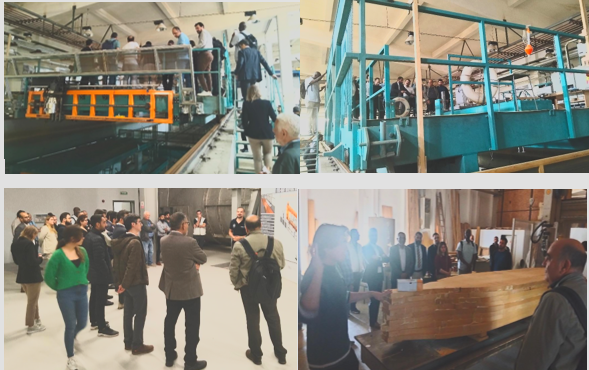
The course’s hybrid format enabled participants to join on site and online, while a laboratory visit offered those attending in person a closer look at ITU’s maritime research facilities.
Dr. Andro Bakica addressed modelling challenges and Computational Fluid Dynamics (CFD)-based methods for energy-saving devices for ships.
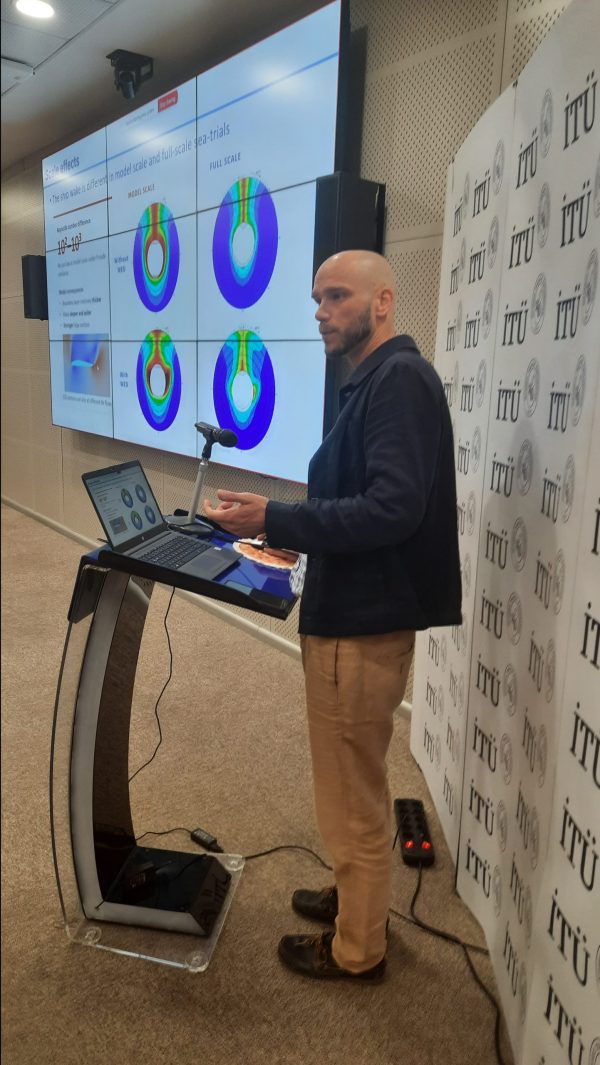
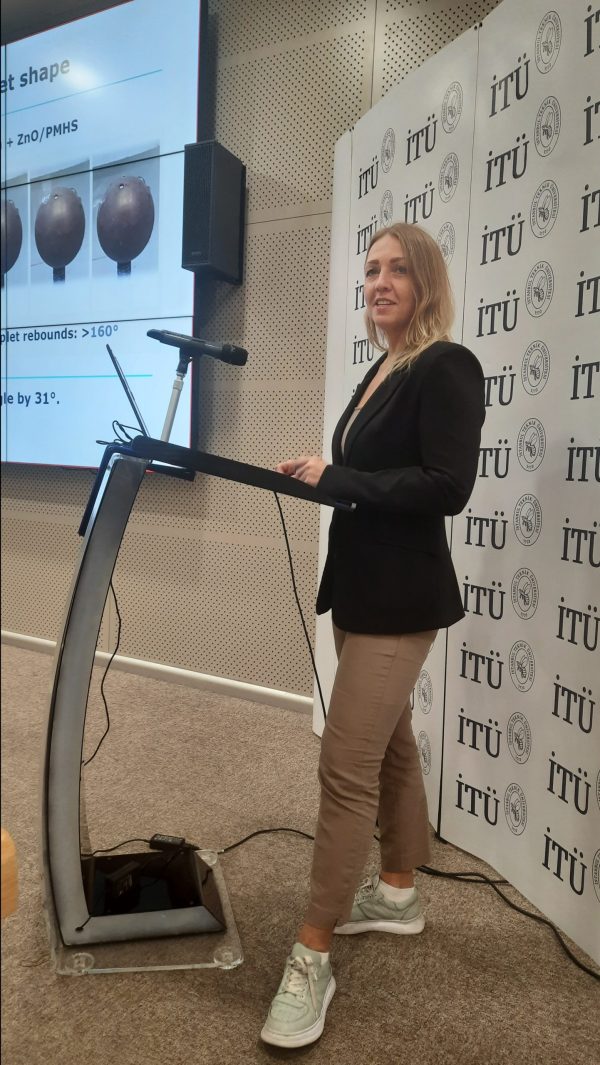
Complementing this topic, Dr. Raminta Skvorčinskienė explored innovative hydrodynamics through two sessions on two-phase flow and complex surfaces for effective drag reduction.
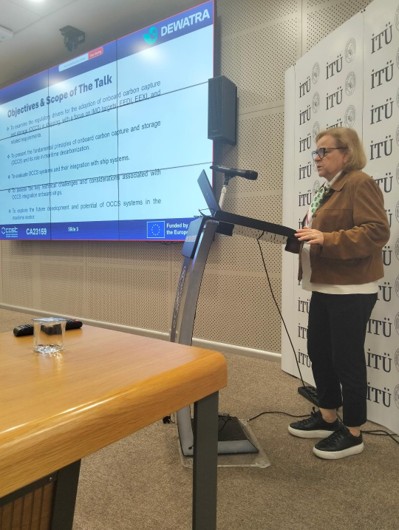
Prof. Selma Ergin examined solvent-based carbon capture and storage systems for ships, presenting an investigation into their application in maritime decarbonisation.
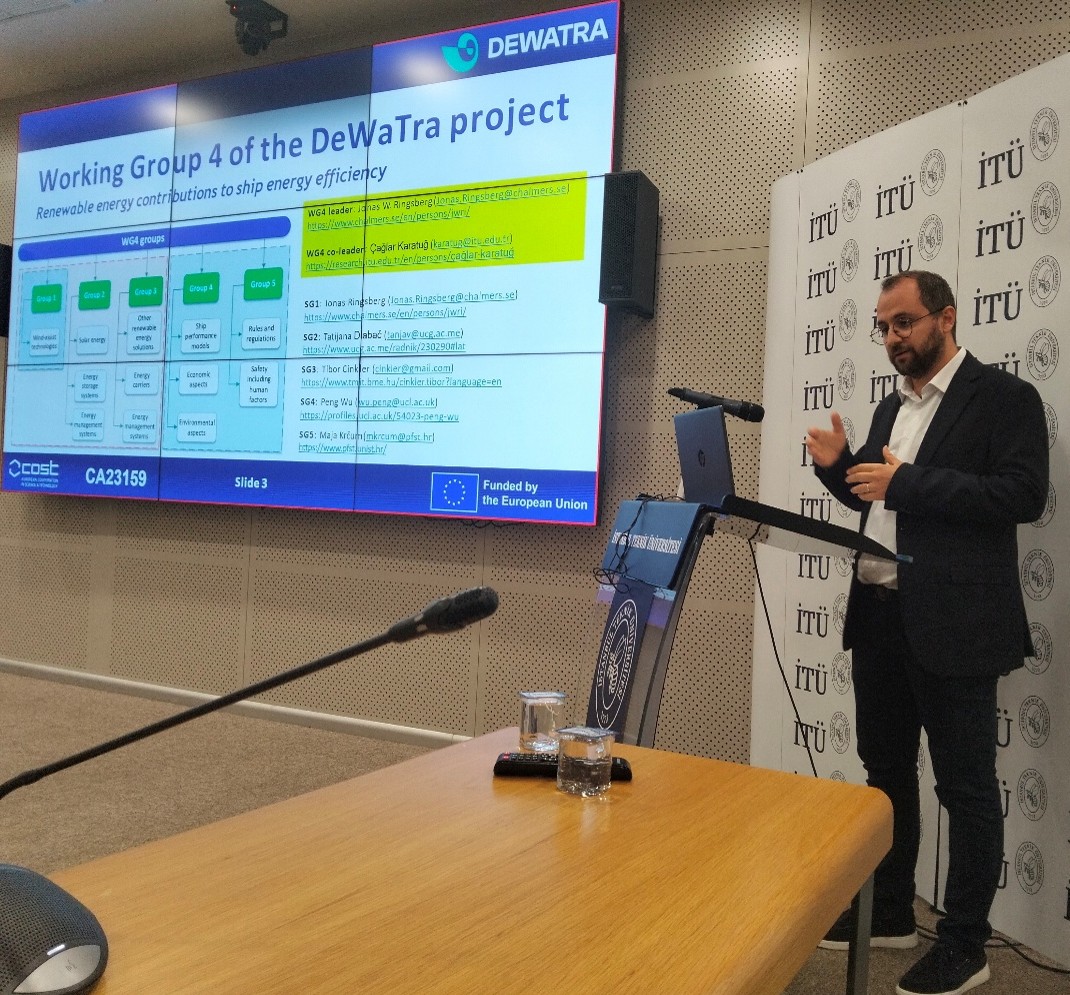
Dr. Çağlar Karatuğ explored opportunities to harness wind energy for sustainable shipping and utilise solar energy in maritime transportation.
The programme brought together different approaches to reducing energy consumption and emissions, highlighting the breadth of research supporting cleaner waterborne transport.
On-site participants also visited ITU’s laboratory facilities, where they viewed a towing tank and ship models used in hydrodynamic research. The visit complemented the lectures, providing an opportunity to explore the experimental side of ship performance assessment.
DEWATRA extends its appreciation to the lecturers for their valuable contributions, to all participants joining on site and online, and to the ITU team for hosting the training and laboratory visit.
The course continues until 9 October 2026, covering Improving Performance in Waterborne Transportation and Alternative-Fuel Propulsion Systems, within the framework of DEWATRA COST Action CA23159 – Decarbonising Waterborne Transportation.