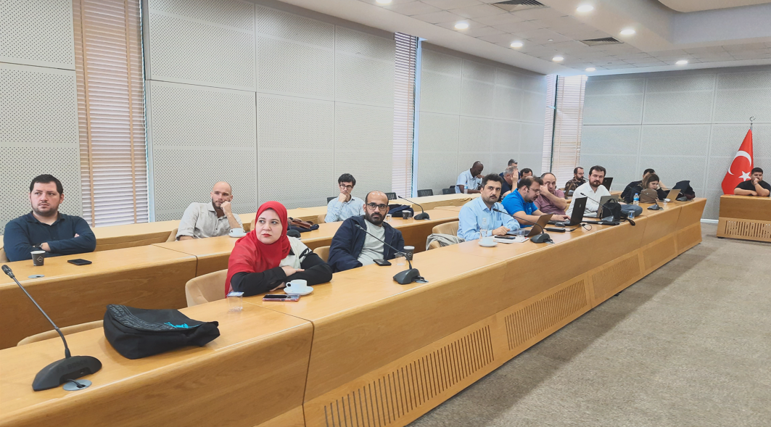
The environmental performance, cost and safe application of alternative fuels were the focus of the fourth day of the DEWATRA Short Training Course on Maritime Decarbonisation, held on 8 October 2026 at Istanbul Technical University (ITU), Türkiye.
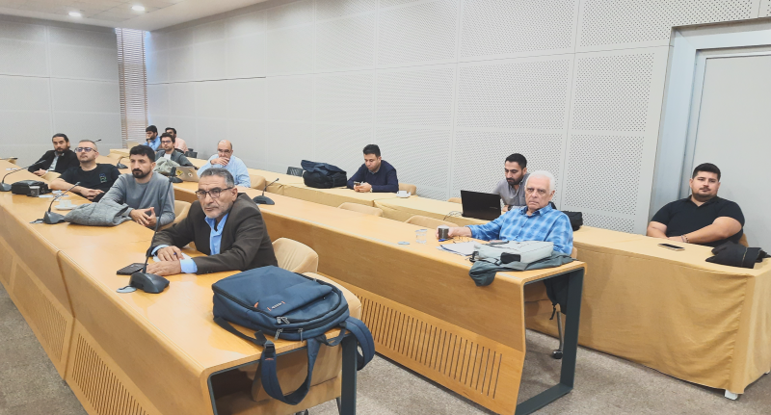
With participants attending on site and online, the hybrid course explored the factors that shape the selection and integration of alternative fuels and propulsion systems for different vessel applications.
Prof. Nikola Vladimir presented life-cycle environmental and cost assessment of alternative fuels and propulsion systems for maritime transport. His second lecture addressed system-level decarbonisation, safety and probabilistic assessment of coastal and inland waterway transport, connecting environmental and economic considerations with the evaluation of transport systems.
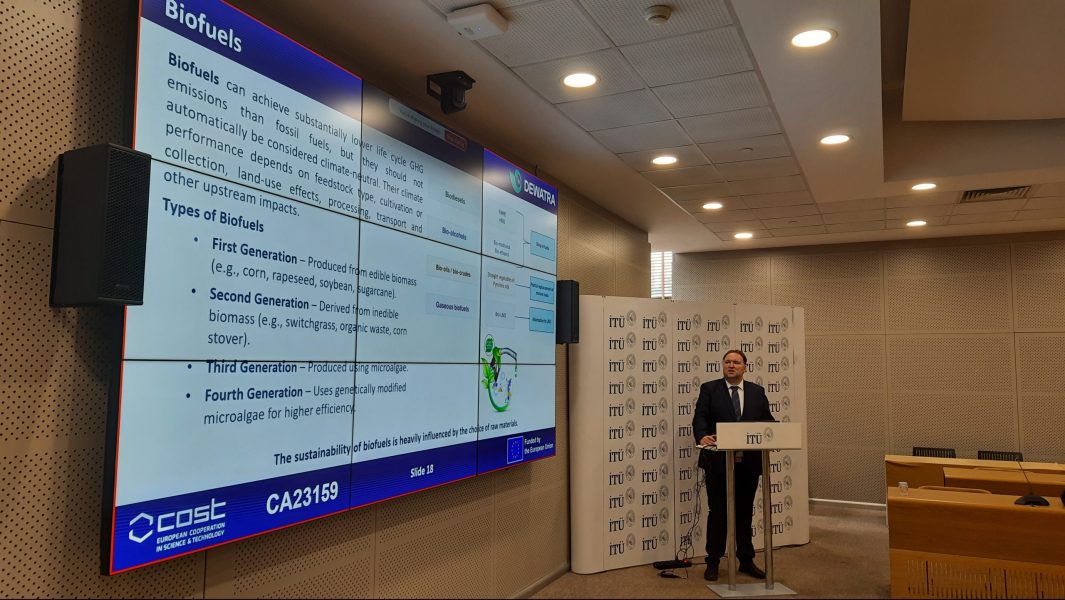
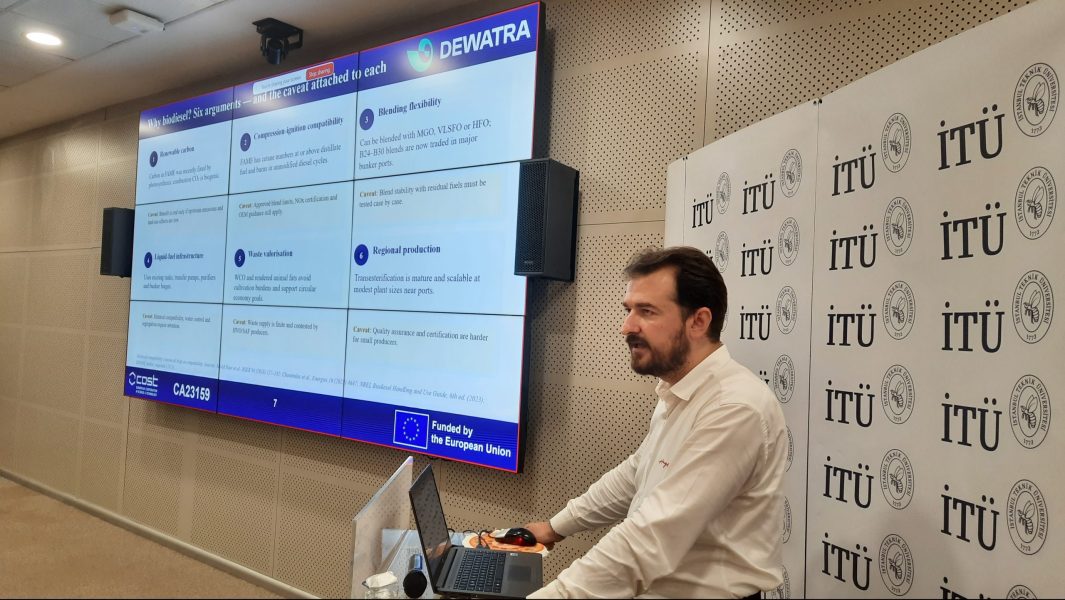
Dr. Ramazan Sener explored biodiesel as a sustainable marine fuel, covering experimental advances, challenges and future directions. He also presented low-temperature combustion strategies for sustainable marine diesel engines, examining approaches relevant to improving combustion performance.
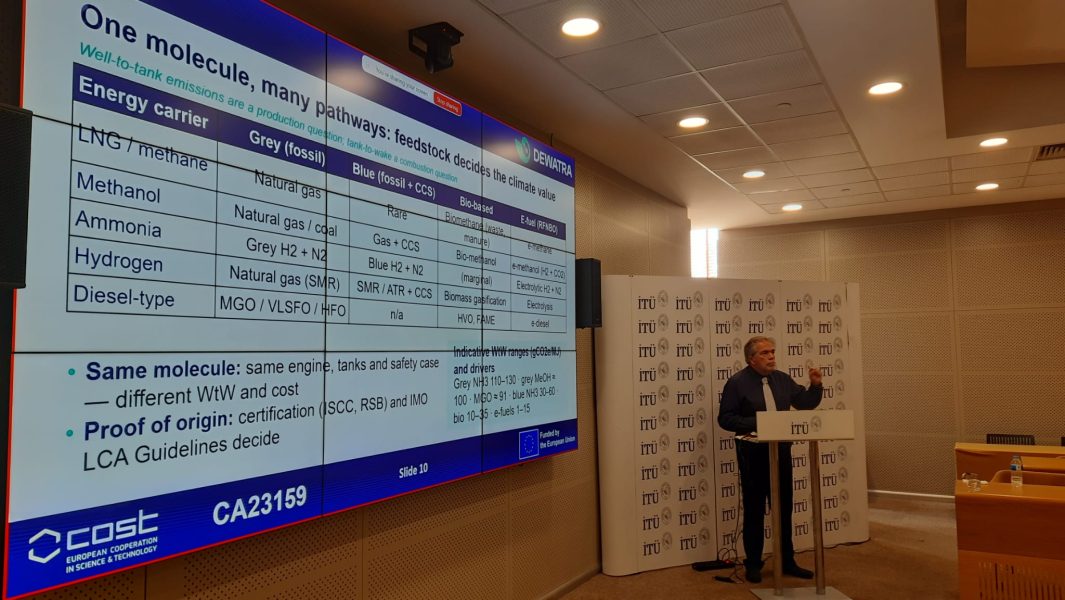
Prof. Elias Yfantis addressed alternative fuels for ship propulsion, examining technology options, trade-offs and vessel applications. His additional lecture focused on the safe integration and operation of alternative-fuel propulsion systems on board ships.
Together, these sessions highlighted the importance of assessing alternative fuels within the wider vessel and transport system. Environmental benefits, costs, technical suitability and safety all contribute to understanding how these solutions can support maritime decarbonisation.
DEWATRA extends its appreciation to the lecturers for sharing their expertise, to participants joining in person and remotely, and to the ITU team for their continued support and hospitality.
The training school concludes on 9 October 2026, with sessions on hybrid propulsion, vessel-specific system selection, maritime energy systems, ship-performance monitoring and nuclear propulsion.
The course is organised within the framework of DEWATRA COST Action CA23159 – Decarbonising Waterborne Transportation. This Action is supported by COST – European Cooperation in Science and Technology.