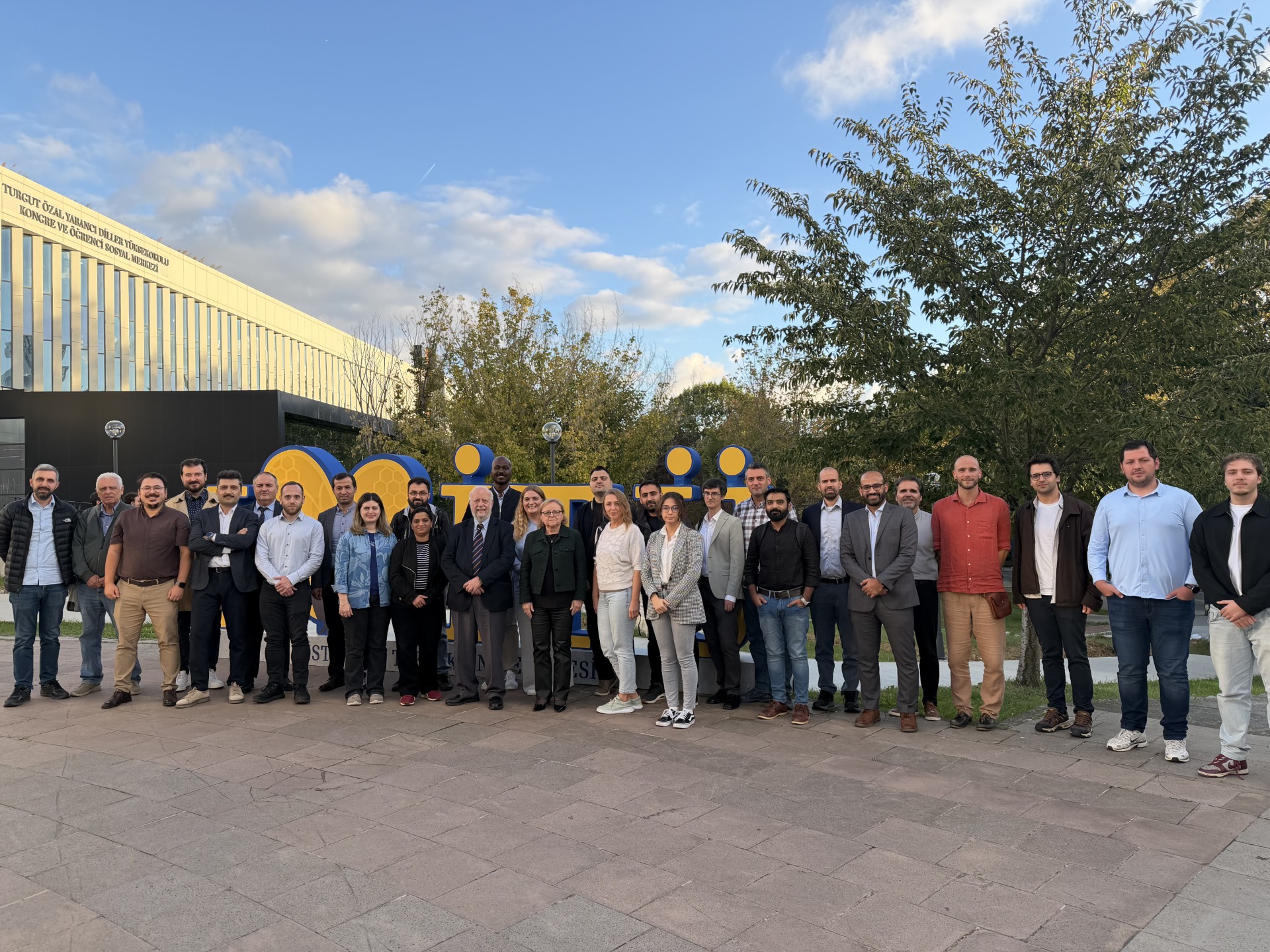
The DEWATRA Short Training Course on Maritime Decarbonisation concluded on 9 October 2026 at Istanbul Technical University (ITU), Türkiye, with sessions exploring hybrid propulsion, maritime energy systems, ship-performance monitoring and nuclear propulsion.
Held in a hybrid format, the five-day course brought together participants on site and online to explore technologies and approaches supporting cleaner, safer and more energy-efficient waterborne transportation.
The final day connected propulsion-system design and selection with the infrastructure and operational assessment needed to support maritime decarbonisation.
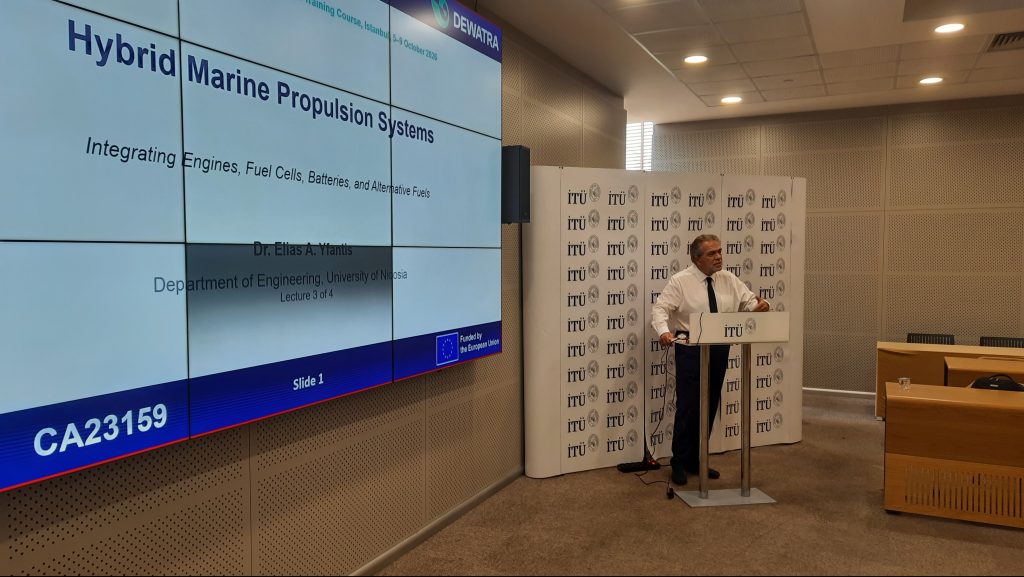
Prof. Elias Yfantis presented hybrid marine propulsion systems, examining the integration of engines, fuel cells, batteries and alternative fuels. His additional lecture addressed the selection of an alternative-fuel propulsion system for a vessel case, bringing vessel-specific considerations into the assessment of technology options.
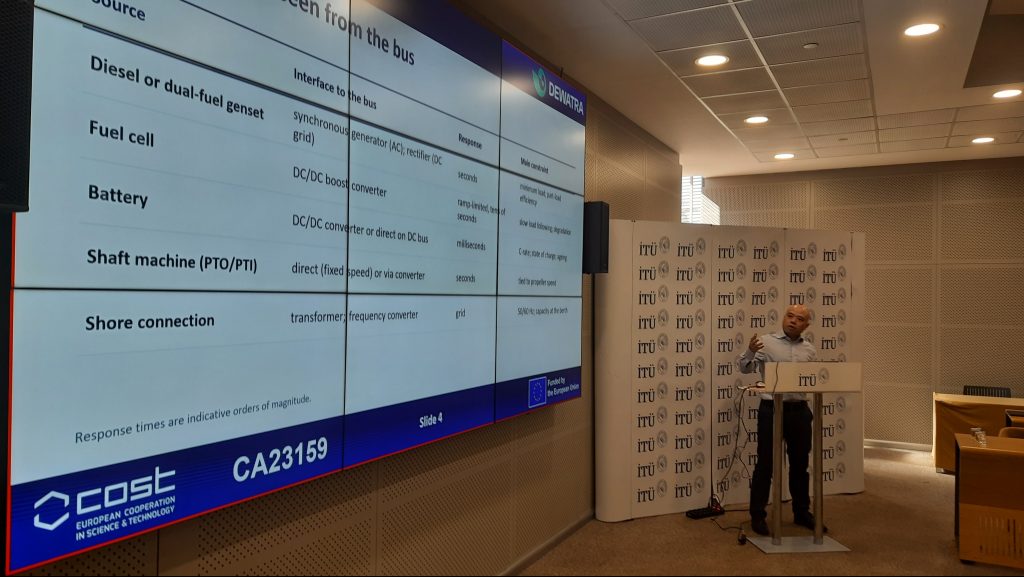
Dr. Peng Wu explored energy systems for maritime decarbonisation, covering infrastructure, energy and power systems. He also delivered a lecture on continuous ship-performance monitoring and analysis, addressing the operational dimension of ship efficiency.
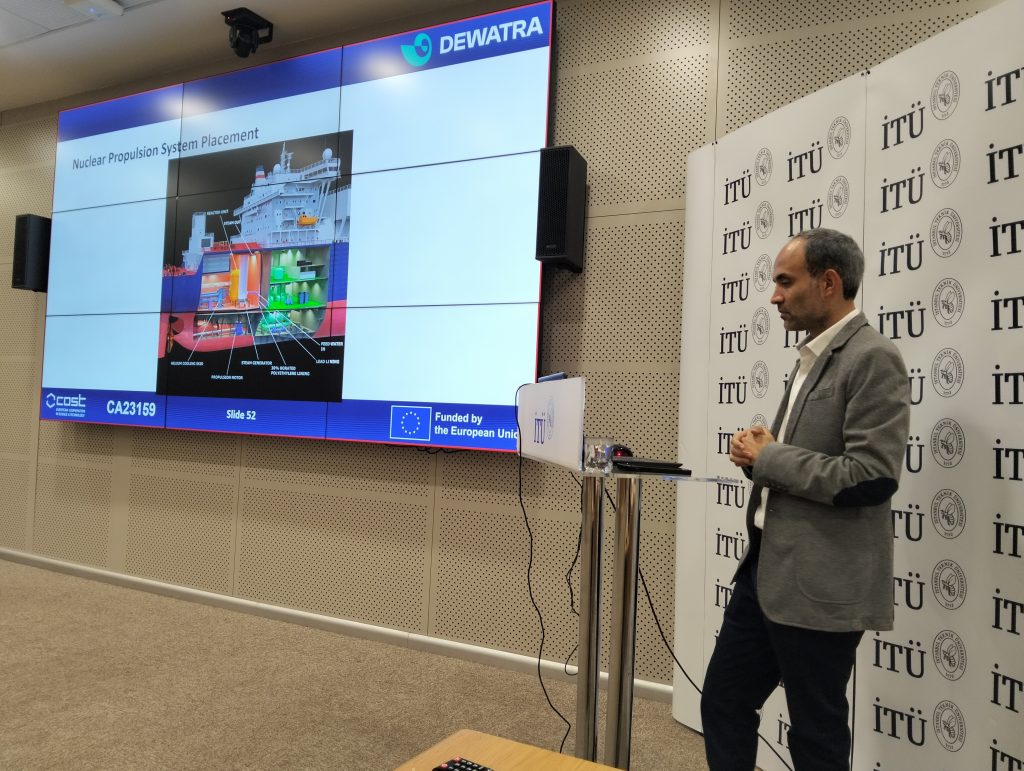
Dr. Burak Zincir presented two sessions on nuclear propulsion for maritime decarbonisation, adding a further technology perspective to the course’s examination of propulsion options.
Running from 5 to 9 October 2026, the training course covered two complementary modules: Improving Performance in Waterborne Transportation and Alternative-Fuel Propulsion Systems.
Across the week, the programme addressed emissions assessment, hydrodynamic performance, energy-saving devices, renewable energy, carbon capture, alternative fuels, life-cycle assessment, regulatory frameworks and safety. A laboratory visit complemented the lectures, offering on-site participants a closer look at ITU’s experimental facilities.
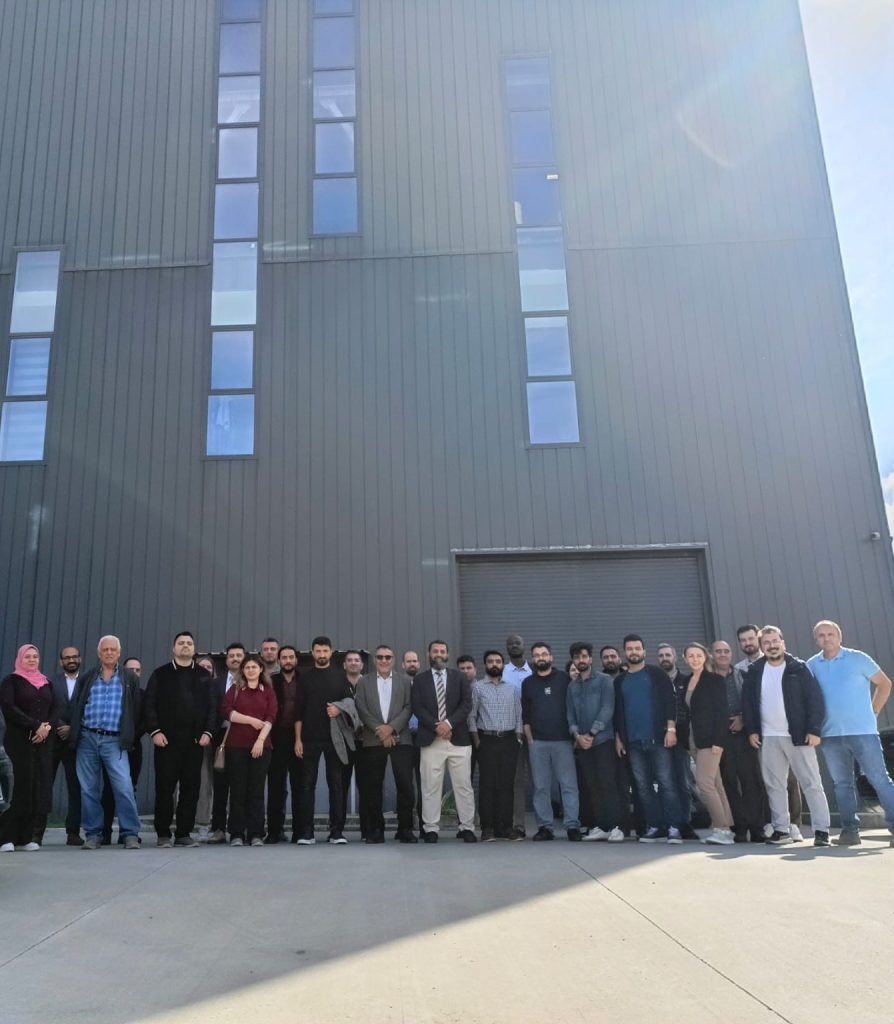
The course provided an opportunity to examine maritime decarbonisation from several connected perspectives, bringing technical solutions together with environmental, economic, regulatory and operational considerations.
DEWATRA extends its warm appreciation to all lecturers for sharing their expertise, to participants attending in person and remotely, and to THE Istanbul Technical University (ITU) organising team for their support and hospitality throughout the week.
The course was organised within the framework of DEWATRA COST Action CA23159 – Decarbonising Waterborne Transportation. This Action is supported by COST – European Cooperation in Science and Technology.